
[ivory-search id="1403" title="Default Search Form"]

Choosing between wide plank European oak and traditional American oak involves more than deciding which wood species you prefer. Each option creates a noticeably different atmosphere in a room.
European oak usually brings a softer, more refined look. Its wide planks, subtle grain patterns, and natural colors work especially well in modern and transitional interiors. Traditional American oak often feels warmer, livelier, and more familiar. Its stronger grain and narrower boards can add movement and character to classic homes.
Neither style looks better in every setting. The right choice depends on your home’s architecture, the feeling you want to create, and how much visual texture you want beneath your feet.
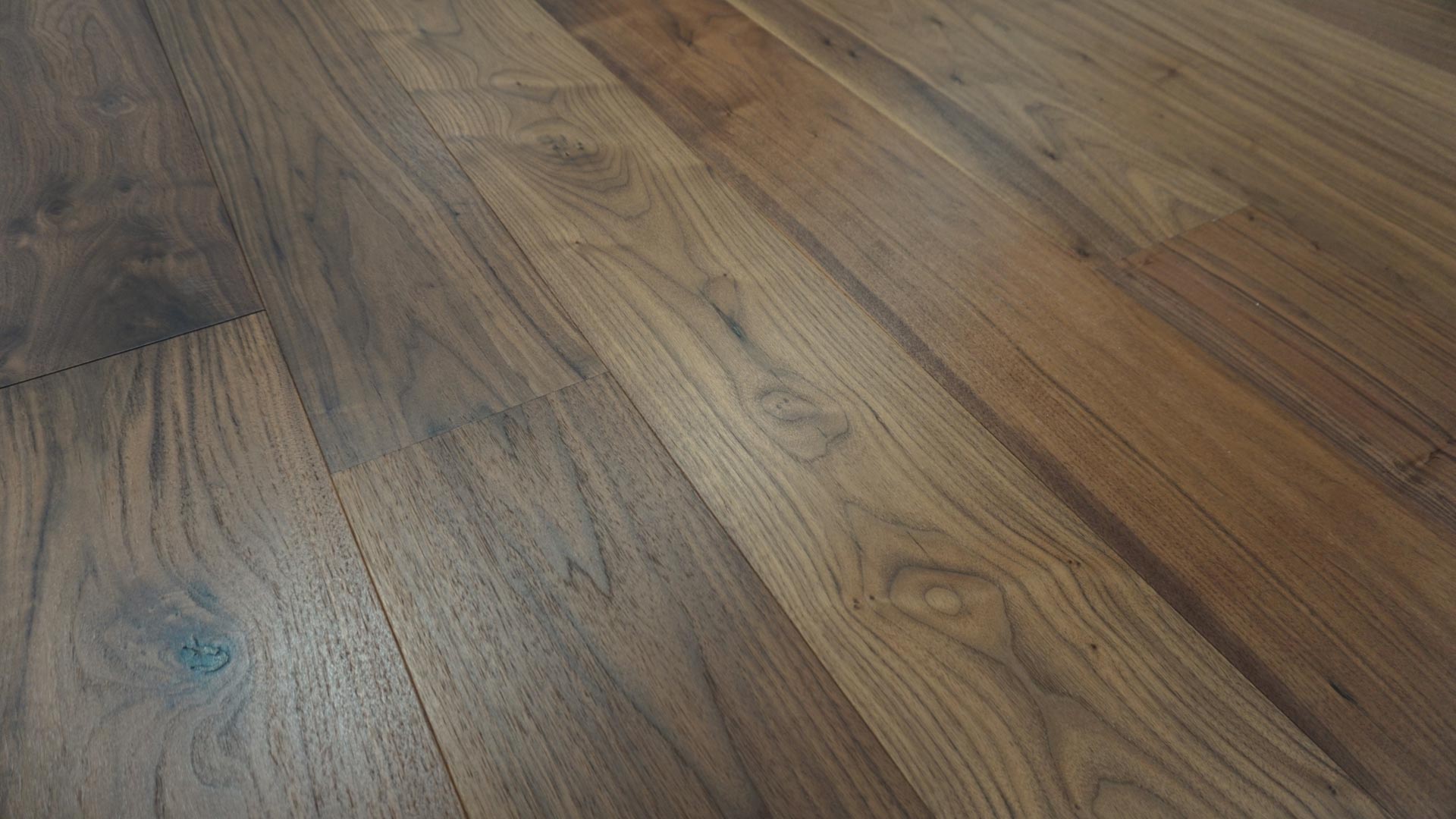
What makes European oak look different?
European oak generally comes from the Quercus robur species, while American flooring manufacturers commonly use white oak or red oak. The trees grow in different climates and develop distinct grain patterns, colors, and structures.
European oak often shows a straighter, more consistent grain. Its natural coloring tends to lean toward soft brown, beige, tan, and muted golden tones. Some boards include knots and mineral streaks, but these details usually blend into the wood instead of dominating it.
Manufacturers also cut European oak differently. They often use a live-sawn method that cuts straight through the log. This approach produces wider boards and displays several grain patterns within each plank. The result feels organic without looking overly busy.
That quieter grain gives European oak its understated appeal. It has character, but it does not constantly call attention to itself.
Why wide planks change the entire room
Plank width plays a major role in how a hardwood floor looks. Traditional flooring often uses boards between two and four inches wide. European oak commonly comes in widths of seven inches or more, with some planks reaching ten or twelve inches.
Wide planks create fewer seams across the floor. Because the eye encounters fewer lines, the room often feels calmer and more open. You also see more of each board’s natural grain, coloring, and knots.
In a large living room, wide European oak can make the floor look almost like one continuous wooden surface. The boards feel substantial, and the natural variations have room to develop. This look works particularly well with open floor plans, large windows, simple furniture, and uncluttered interiors.
Wide boards can also make a smaller room feel less visually crowded. Narrow planks create more lines, and those repeated lines can make the floor appear busier. Wide planks simplify the surface and allow other design elements to breathe.
That does not mean wider always looks better. In a small historic home, extremely wide boards may feel out of scale. The architecture and room proportions still matter.
The familiar character of traditional American oak
American oak has a recognizable appearance that many people immediately associate with hardwood flooring. Its grain often looks stronger and more active than European oak. Depending on the species and cut, you may see sweeping patterns, cathedral shapes, rays, flecks, and noticeable color changes between boards.
Red oak typically carries warmer pink, amber, or reddish undertones. White oak tends to have a more neutral brown appearance, although it still shows a pronounced grain.
Traditional American oak floors often use narrower boards. These boards create more seams and more visible movement across the room. The look feels detailed, established, and distinctly American.
This style makes sense in Colonial, Craftsman, farmhouse, ranch, and traditional homes. It can also complement interiors with decorative molding, detailed cabinetry, antique furniture, or warm architectural finishes.
Some homeowners call this appearance busy. Others see depth, warmth, and personality. Much depends on what surrounds the floor.
Modern interiors tend to favor European oak
Wide plank European oak has become closely connected with modern interior design, but it does not look cold or overly minimalist. The wood introduces warmth while maintaining the clean appearance that contemporary spaces need.
Its soft grain allows furniture, artwork, stone, and architectural details to take priority. Instead of competing with the room, the floor supports the overall design.
Natural and matte finishes strengthen this effect. A low-sheen finish preserves the wood’s texture and avoids the reflective appearance of older high-gloss floors. Light beige, pale brown, sandy, and muted taupe colors also fit easily into modern color palettes.
European oak works especially well with creamy white walls, black accents, natural stone, linen fabrics, and simple cabinetry. It can soften polished concrete, glass, and metal without making the room feel traditional.
The floor still has variation, especially if you choose a rustic grade with knots and cracks. However, the wider boards spread those features across a larger surface. That helps the character feel intentional rather than crowded.
American oak brings more visual energy
Traditional American oak floors usually contribute more texture to a room. The narrower planks produce a steady rhythm, while the stronger grain creates visible movement.
That energy can make a simple space feel warmer and more finished. A room with plain walls and straightforward furniture may benefit from a floor that carries more personality.
American oak also works beautifully with rich stains. Medium brown, walnut, honey, and deeper espresso tones bring out the grain and create a classic appearance. Even natural finishes can highlight the difference between the earlywood and latewood portions of the grain.
The tradeoff comes with flexibility. A highly figured oak floor with a dark or orange-toned stain can limit future design choices. If you later replace traditional furniture with cleaner, contemporary pieces, the floor may still pull the room toward a more conventional style.
A neutral white oak finish offers more freedom. It keeps the recognizable American grain while avoiding the reddish and golden tones that can make some floors look dated.
Rustic character looks different in each option
Both European and American oak can include knots, color variation, mineral marks, and natural imperfections. The difference lies in how those features appear within the floor.
Rustic European oak often shows large knots, occasional cracks, and long grain patterns. Wide boards give each feature more space, which can make the imperfections look dramatic yet balanced. The floor feels natural, relaxed, and slightly aged.
Rustic American oak usually combines its natural marks with stronger grain and more board lines. This creates a livelier surface. In the right interior, that extra variation feels welcoming and full of character. In a room that already contains patterned fabrics, detailed cabinetry, and many decorative elements, it may become visually heavy.
Homeowners who want a clean European look should not assume that all European oak looks uniform. Select-grade flooring offers fewer knots and more consistent coloring. Character-grade and rustic-grade products can look quite expressive. The grade often affects the final appearance as much as the species itself.
Which one works better in an open floor plan?
Wide plank European oak usually has an advantage in open-concept homes. A continuous floor may run through the kitchen, dining area, living room, and hallway. In that situation, hundreds of narrow board lines can introduce more movement than the space needs.
Wide boards help connect the different areas. They provide a calm foundation while furniture, lighting, rugs, and cabinetry define each zone.
The long planks also emphasize the scale of the interior. When installers run them along the longest direction of the room, they can lead the eye through the space and strengthen its sense of flow.
Traditional American oak can still work in an open layout, particularly when the home has a classic architectural style. Choosing a restrained grade and a neutral finish can prevent the grain from overwhelming the design. Slightly wider American white oak boards also create a useful middle ground between traditional strip flooring and oversized European planks.
Does traditional American oak look outdated?
American oak itself does not look outdated. Certain combinations do.
Narrow red oak boards with a shiny orange or honey-colored finish often remind people of homes from previous decades. The species did not create that dated appearance on its own. The stain color, plank width, gloss level, and surrounding décor all contributed to it.
American white oak with a natural matte finish can look current and sophisticated. Wider board options can move it even closer to the relaxed appearance associated with European oak, while still preserving its stronger grain.
Red oak can also look fresh when the finish controls its pink undertones. However, achieving a pale or neutral color on red oak often takes more care. Its natural warmth can return through certain stains and finishes.
If you already have American oak flooring, refinishing may completely change how it relates to your interior. You may not need to replace it just to achieve a more updated look.
Think about more than current trends
Wide plank European oak has a strong presence in today’s interior design, but trends should not make the entire decision. Flooring covers a large surface and may remain in the home for decades.
Consider the permanent parts of the property. Look at the doors, trim, ceiling height, windows, cabinetry, and overall architectural character. A floor that connects naturally with those features will usually age better than one chosen only because it appears in current design photos.
A traditional Craftsman home may look more authentic with American oak and visible grain. A newly built home with an open layout and minimal detailing may benefit from the calm scale of wide European planks.
Furniture matters too. European oak provides a flexible background for Scandinavian, organic modern, contemporary, transitional, and minimalist pieces. American oak often pairs naturally with classic, farmhouse, vintage, and traditional furnishings. These boundaries remain flexible, but they offer a helpful starting point.
The finish can matter as much as the wood
Two European oak floors can look completely different. The same applies to American oak. Color, texture, sheen, grade, and surface treatment can change the floor’s personality.
Brushed or lightly wire-brushed European oak emphasizes the grain without adding a glossy surface. Smoked and fumed finishes can deepen the color and create rich variation. Pale finishes can push the floor toward a modern Scandinavian look.
American oak reacts strongly to stain because its grain absorbs color at different rates. This can produce beautiful contrast, but it can also make the pattern more prominent. A clear matte finish gives the wood a cleaner, more natural appearance, while darker stains make it feel more formal.
Always view full flooring panels rather than judging a single sample. One board cannot show the range of knots, grain patterns, and color variation that will appear across an entire room. Place several samples next to your cabinets, walls, and furniture, then check them in morning and evening light.
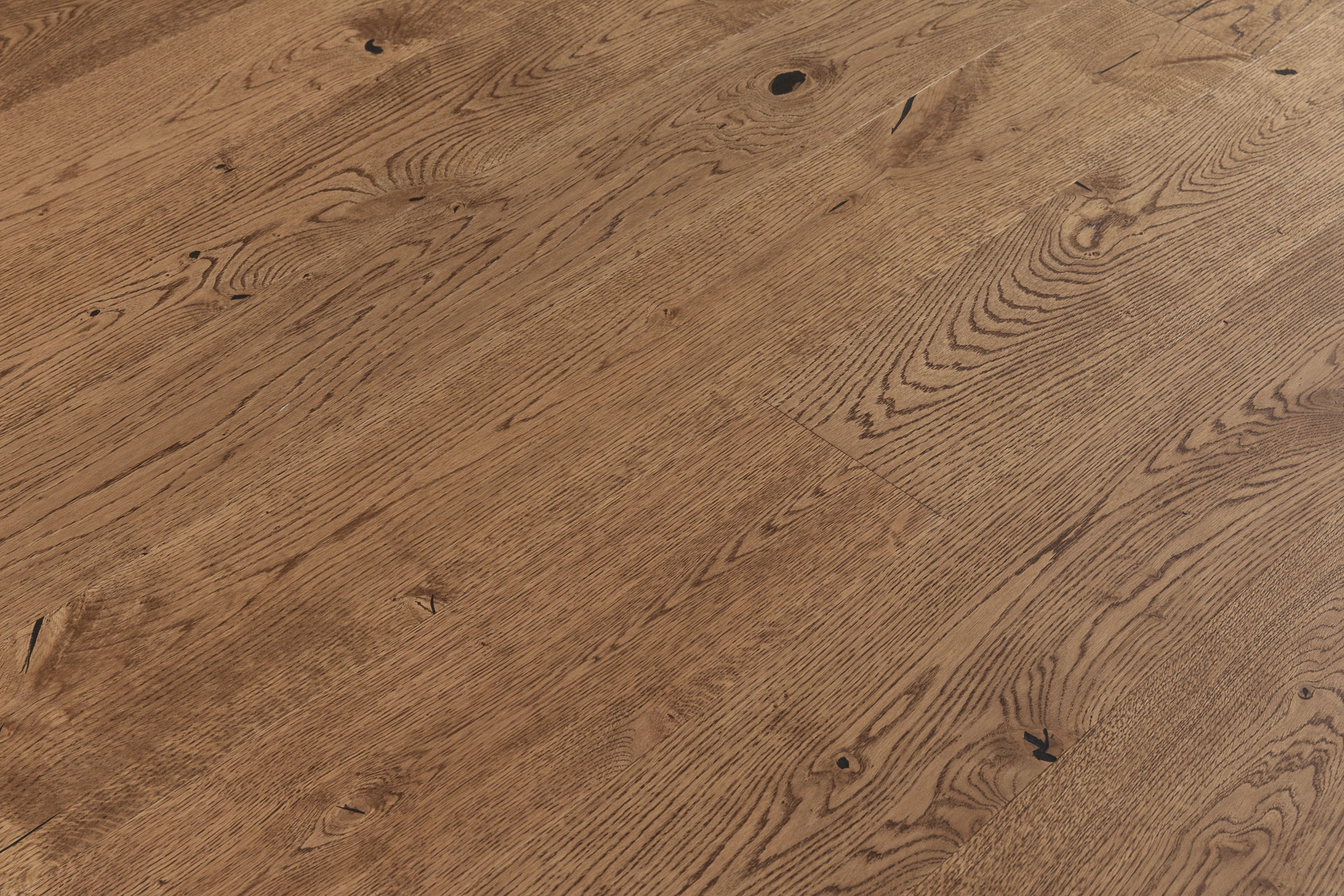
So which look works better?
For a calm, spacious, and contemporary interior, wide-plank European oak usually works better. Its broad boards, restrained grain, and natural tones create a refined foundation without making the room feel plain. It also fits especially well in open floor plans where visual continuity matters.
Traditional American oak works better when you want warmth, movement, and familiar hardwood character. It can strengthen the personality of a traditional home and make an understated room feel richer.
The best choice comes down to balance. If your interior already includes bold stone, dramatic cabinetry, patterned fabrics, or detailed furniture, quieter European oak can keep the design grounded. If the room has simple surfaces and needs more character, American oak may give it the energy it lacks.
Both can create beautiful, long-lasting floors. European oak tends to shape a softer and more modern atmosphere, while American oak celebrates visible grain and traditional craftsmanship. The better look is the one that feels connected to the home, not merely added on top of it.