
[ivory-search id="1403" title="Default Search Form"]

Italian hardwood flooring has earned a reputation for elegant design, careful craftsmanship, and premium finishes. Many homeowners associate it with luxury interiors, historic villas, and sophisticated European architecture. Asian-made wood flooring, on the other hand, often attracts buyers who want more choices at a lower price.
However, country of origin alone does not determine quality. Italy produces both exceptional and ordinary flooring, while factories throughout Asia manufacture products across every quality level. Some Asian manufacturers produce excellent flooring for respected international brands.
The real differences usually appear in the design philosophy, construction, finishing process, material selection, quality control, and price. Understanding these details will help you compare the actual products instead of relying on the country printed on the box.
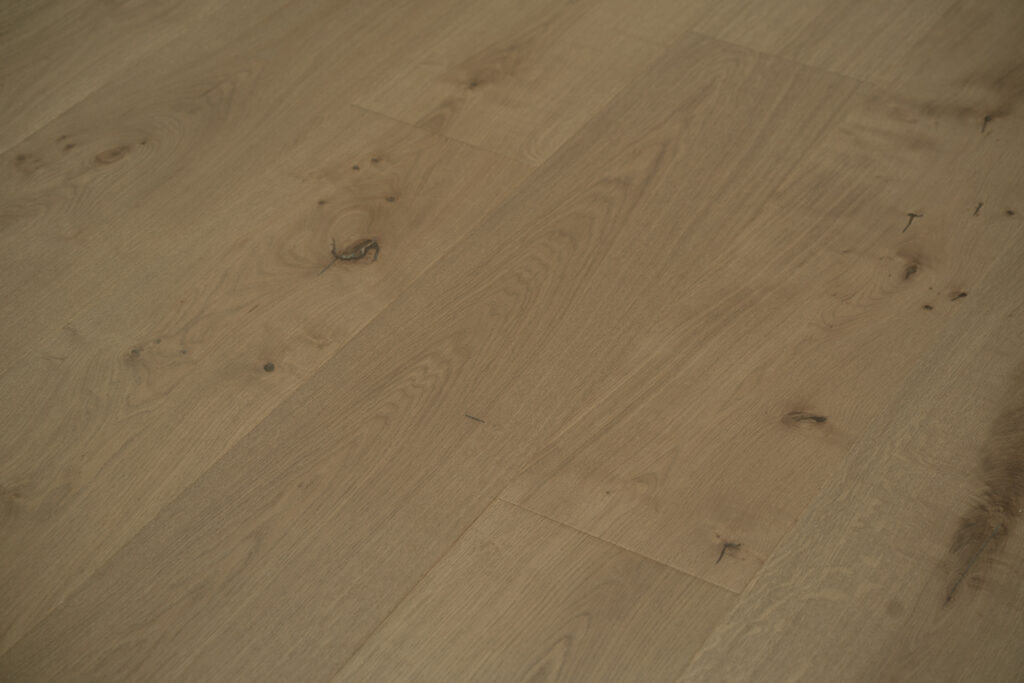
Italian flooring emphasizes design and craftsmanship
Italian manufacturers often treat hardwood flooring as part of the home’s architecture, not simply as a surface that covers the subfloor. They pay close attention to color, texture, proportion, plank width, edge details, and the way the floor interacts with furniture and natural light.
This approach reflects Italy’s long history in furniture, architecture, fashion, and interior design. Many Italian flooring collections include smoked oak, wire-brushed textures, hand-planed surfaces, natural oils, subtle stains, and custom patterns. You may also find unusual layouts such as chevron, herringbone, basket weave, and modular geometric designs.
The result often looks more natural and less mechanically uniform. Instead of hiding every knot and color variation, many Italian manufacturers use those characteristics to give the floor depth and personality.
Not every homeowner wants that look. Some people prefer clean boards with consistent grain and color. Still, Italian flooring gives designers more opportunities to make the floor a central visual element.
Asian-made flooring covers a much wider market
The phrase Asian-made wood flooring describes an enormous category. It may refer to flooring from China, Vietnam, Indonesia, Malaysia, Cambodia, or several other countries. Each country contains numerous manufacturers with different equipment, materials, standards, and levels of experience.
Some factories focus on affordable, high-volume flooring for large retailers. Others manufacture premium products for European and American brands. A factory may even produce an inexpensive private label collection on one production line and a carefully engineered luxury collection on another.
That variation makes broad comparisons difficult. Buyers should never assume that Asian-made flooring has poor quality simply because of its origin. At the same time, a remarkably low price often requires the manufacturer to reduce costs somewhere. The company may use a thinner hardwood surface, fewer core layers, shorter drying periods, less expensive adhesives, simpler finishes, or broader quality tolerances.
Rather than asking whether Italian or Asian-made flooring offers better quality, ask how each manufacturer builds, tests, and documents its product.
Construction often reveals the biggest difference
Engineered hardwood flooring contains a real wood surface attached to a layered core. The core helps the plank resist movement when temperature and humidity change.
Premium Italian manufacturers often place strong emphasis on this internal structure. For example, Italian manufacturer Listone Giordano explains that its flooring uses a multilayer birch support, precision joints, and carefully positioned incisions to improve stability. The company traces its multilayer flooring technology to research that Professor Guglielmo Giordano developed in 1984. You can read more about the company’s approach on the Listone Giordano technology page.
Many affordable Asian-made products use plywood cores successfully. However, the number and quality of the layers can vary. Low-cost products may contain softer core materials, internal gaps, inconsistent bonding, or layers that react differently to moisture.
When comparing two floors, examine more than the decorative surface. Ask for the total plank thickness, hardwood wear layer thickness, core material, number of layers, adhesive type, and recommended installation method.
A beautiful sample cannot show you how the core will perform after several seasons.
The wear layer affects the floor’s useful life
The wear layer refers to the real hardwood above the engineered core. A thicker layer gives the homeowner more material to work with if the floor needs sanding or refinishing in the future.
Manufacturers may offer engineered flooring with wear layers ranging from roughly 1 millimeter to more than 4 millimeters. Product design, surface texture, and installation conditions also affect whether a flooring professional can refinish it.
Italian flooring often costs more partly because premium collections use thicker surface layers and more selective wood grades. However, buyers should confirm the measurement rather than assume that every Italian product has a substantial wear layer.
The same rule applies to Asian-made flooring. Some premium products provide excellent wear layers, while certain budget products use a very thin decorative layer. A thin layer may work perfectly well for a carefully maintained home, but it leaves less room for future restoration.
Italian finishes often create a more natural appearance
Finishing represents one of the most noticeable differences between many Italian and mass-market Asian-made floors.
Italian producers often favor matte finishes, penetrating oils, reactive stains, gentle smoking, and textured surfaces that highlight the natural grain. These treatments can create rich color without making the floor look heavily coated. Some collections use different treatments on individual planks, which produces controlled variation across the room.
Budget flooring usually relies on faster, highly repeatable finishing systems. Manufacturers may apply strong stains and durable ultraviolet-cured coatings that make boards look consistent from one carton to the next. This approach offers practical benefits. The floor may resist scratches, require simple maintenance, and cost less to produce.
The choice depends on your priorities. A natural oil finish may develop character and allow localized maintenance, but it may require more care. A tough factory coating may offer easier daily maintenance, although repairs can become more noticeable.
Whenever possible, view several full planks together. One small showroom sample cannot show the true range of grain, knots, texture, and color.
European standards add documentation, not automatic superiority
Italian flooring that enters the European construction market must follow applicable European product requirements. Under the European Union’s Construction Products Regulation, manufacturers use a Declaration of Performance and CE marking when a harmonized standard covers the product. The European Commission explains that CE marking connects a construction product to its declared performance and assessment method. You can review the process through the European Commission’s CE marking guidance.
The European Union also maintains voluntary environmental criteria for wood, cork, and bamboo floor coverings. The current EU Ecolabel criteria examine wood sourcing, hazardous substances, manufacturing energy, and volatile organic compound emissions.
These systems encourage manufacturers to document performance, but they do not mean every Italian floor carries an environmental label. They also do not exclude Asian manufacturers. An Asian producer can meet European requirements and sell compliant flooring in Europe.
For flooring sold in the United States, buyers should look for applicable American documentation as well. The United States Environmental Protection Agency requires certain composite wood products to comply with TSCA Title VI formaldehyde emission standards. These rules apply to qualifying products that companies manufacture domestically or import. The EPA formaldehyde standards page explains the labeling, testing, certification, and recordkeeping requirements.
Wood sourcing deserves closer attention
A Made in Italy label does not necessarily mean the tree grew in Italy. An Italian company may source French oak, American walnut, European walnut, or wood from another region and then dry, mill, engineer, finish, and package the flooring in Italy.
That practice does not indicate a problem. In fact, manufacturers often select wood from regions that produce the grain, color, and strength they need. Buyers should focus on traceability and responsible forest management.
Ask whether the product carries Forest Stewardship Council certification or another credible forestry certification. The FSC Chain of Custody system tracks certified material as companies process and trade it through the supply chain.
Do not accept a vague statement such as “sustainable wood” without supporting documentation. Ask for the certificate number and verify it through the certification organization.
Quality control matters more than geography
Consistent milling helps boards fit together cleanly. Proper moisture control reduces excessive expansion, contraction, cupping, and gaps. Strong bonding helps prevent the layers from separating. Careful grading ensures that the delivered floor reasonably matches the sample.
These factors depend on the manufacturer, not the continent.
Before buying, request a full technical data sheet and written warranty. Ask the retailer who manufactured the floor, where the company completed each stage of production, and who will handle a warranty claim. Also ask whether replacement material will remain available if you need repairs later.
I always recommend opening several cartons before installation and laying the boards loosely across the room. This simple step lets you blend light and dark pieces, identify damaged boards, and prevent one section from developing an unintended color patch.
Is Italian hardwood flooring worth the higher price
Italian hardwood flooring may justify its price when you value distinctive design, refined textures, sophisticated colors, precise construction, and detailed product documentation. It often works especially well in custom homes, luxury renovations, and interiors where the floor plays a major design role.
Asian-made flooring may offer better value when budget, availability, and practical durability matter most. A well-documented product from a reputable Asian manufacturer can outperform a poorly specified European floor.
Compare the wear layer, core construction, finish, moisture range, emission certifications, forestry claims, warranty, and manufacturer reputation. Then consider how the floor looks across a larger area.
The best hardwood floor does not come from a particular country. It comes from a manufacturer that selects good materials, controls production carefully, supports its claims with reliable documentation, and creates a floor that fits your home and lifestyle.